Garden fence etiquette – should the “good” side face towards you or your neighbour?
Last reviewed: December 2025 • Applies to England & Wales
If you’re putting up a new garden fence between you and your neighbours, one question almost always pops up:
Who gets the “good” side – me, or them?
People often feel very strongly about this, so it’s worth understanding what the law actually says, what the usual etiquette is, and how to avoid a boundary bust up.
Quick answer
- In the UK there’s no specific law that says your neighbour must get the “good” side of a garden fence.
- If it’s your boundary and you’re paying for the fence, you can normally choose which way round it goes.
- Many people choose to show the nicer side to the road or public footpath, and keep the posts and rails on the inside for security.
- Between gardens, the “right” answer usually comes down to who owns the fence, safety, and keeping the peace with your neighbours.
This guide explains the main things to think about before you book your fence installation.
This is general guidance only, not legal advice. For anything complex or contentious, it’s always worth speaking to a legal expert.
What do we mean by the “good” side of a fence?
Most modern timber fences and gates have:
- A “good” (or “nice”) side – the smooth, finished side with neat boards or panels.
- A “back” side – where you can see the posts, horizontal rails and fixings. It’s stronger, but usually less attractive.
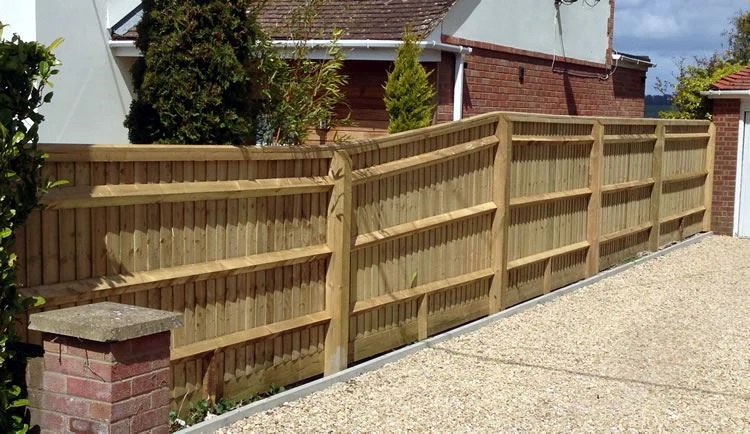
With close board/featheredge fencing, the good side is where you just see the vertical boards. With panel fencing, the good side is often the more decorative face of the panel.
When people argue about “who gets the good side”, they’re really asking “Who has to look at the posts and rails?”
Is there a UK law about which way your fence must face?
Short answer: no – there’s no hard-and-fast law in England and Wales that says the “good” side of a fence must face you, your neighbour, or the road.
What does matter is:
- Whose boundary it is – check your property deeds or Land Registry documents.
- Planning rules – for example, height limits and special rules in Conservation Areas, Areas of Outstanding Natural Beauty (AONB) or around listed buildings.
- Any covenants or estate rules that came with the property (common on newer or “open plan” developments).
As a rule of thumb:
- Most garden fences can be up to 2 metres high without planning permission.
- Fences and walls next to a highway (or its pavement) usually have a lower height limit, often around 1 metre before permission is needed.
If you’re unsure, your local Planning Office or the Planning Portal is a good place to double-check. You can also read our guide: “Do I Need Planning Permission for a Fence?”
Garden fence etiquette – who usually gets the “good” side?
Because the law is fairly quiet on fence orientation, we’re really talking about etiquette and common sense here.
Side and back garden fences between neighbours
If the fence sits on your boundary and you’re paying for it:
- There’s no reason you shouldn’t have the good side facing your garden.
In practice, many people like to offer the nicer side to their neighbour as a goodwill gesture, especially if they get on well or if the neighbour has had the “good side” historically.
Things to think about:
- How important is the view? If you spend a lot of time in your garden and the fence is a key backdrop to your patio or seating area, you may prefer the good side.
- Future neighbour relations. A good fence can last 15–20 years. It’s often worth making a decision you can both live with for a long time.
There’s no obligation to give your neighbour the good side, but being flexible can help keep things friendly.
Fences next to roads or public footpaths
Here there is a strong convention:
- The good side normally faces outwards towards the road or public footpath.
- The posts and rails sit on the garden side, where they’re less visible to passers by and harder to climb for potential intruders.
If you put the fence up the other way round on a front boundary, it can look “inside out”, and may attract comments from neighbours or your local planning officer – even though there isn’t a specific law that forces you to face it one way.
When you’re sharing the cost of a fence
If both you and your neighbour are contributing financially:
- Agree the direction in advance, before any materials are ordered.
- Talk about:
- Who technically owns the boundary
- How much each of you is paying
- Whether one of you especially needs the good side as a backdrop (for example, for a patio, play area or seating space)
Sometimes the fairest solution is to choose a style that looks good on both sides, so neither of you feel you’re losing out. We’ll look at some options below.
A quick “which way should it face?” guide
You might find this simple guide helpful:
| Situation | Typical best practice | Why |
|---|---|---|
| Fence between two back gardens (your boundary, you’re paying) | Either way is legally fine; decide based on views, security and neighbourly relations | Balances courtesy with your own enjoyment |
| Shared-cost fence between gardens | Agree orientation in writing; consider a “good both sides” design | Avoids disputes and misunderstandings |
| Fence along a road or pavement | Good side facing the road, rails inside your garden | Looks right from the street and can be more secure |
| Neighbour’s old fence you dislike | Put your own fence just inside your boundary; keep theirs untouched | Gives you control over appearance without interfering with their property |
Security, privacy and practicality
When we’re advising customers in Oxfordshire, we don’t just think about looks – security and practicality matter too.
Rails on the inside for security
Having the posts and rails on your side of the fence usually means:
- It’s harder for someone outside (or from a public footpath) to use the rails as a climbing frame.
- The fence can be easier for you to inspect and maintain, because you can see the structure.
This is especially important where a fence borders:
- A public footpath or alleyway
- A road or open land
- Areas that are hidden from view, such as the back of long gardens
Between two private gardens, this is less critical, but it’s still worth considering if you’re worried about security.
Pets, children and wear-and-tear
Think about:
- Dogs and footballs – close board fences with the good side facing into a garden can be slightly better at stopping dogs or balls if the posts and rails are behind them.
- Access for repairs – which side will your installer need to access if something needs fixing?
- Climbing children – rails on one side can be very tempting to small climbers, so decide which family can manage that more easily!
Can you put up a fence without your neighbour’s permission?
What if your neighbour is responsible for the boundary, and they’ve put up a fence you really don’t like – or they’ve given you the “ugly” side?
In many cases, you can erect your own fence just inside your boundary to hide or soften the existing one. But you must:
- Make sure your new fence is entirely on your land, not straddling the boundary.
- Stay within the usual height limits or seek planning permission if you need to go higher.
- Avoid touching or altering your neighbour’s fence (no screwing panels to it, painting it, or leaning heavy items against it) unless they’ve clearly agreed.
Even if you can’t stand the look of their fence, it’s still their property, and changing it without permission can cause serious disputes.
If you’re not sure where the boundary lies, it’s worth clarifying this first (see below).
Which boundary is legally your responsibility?
Who “gets the good side” often depends on who owns or is responsible for that boundary.
There’s no universal rule (such as “left-hand fence is always yours”). To work it out, you need to look at:
- Your title deeds and plans
- Any T marks or wording assigning responsibility
- Historical agreements or arrangements between previous owners
We’ve written a more detailed guide to help with this: “If Your Neighbour Won’t Fix Their Garden Fence – What Can You Do?”
That article explains, step by step, how to check ownership and responsibility for a fence.
Gates have a “good” side too
Don’t forget about gates:
- Garden and driveway gates also have a best face, and usually look more attractive from one side.
- On front boundaries, the traditional approach is to have the good side facing the road or footpath, so the property looks smart from the street.
You can still position a gate to give you a nice view from inside the garden – just make sure the way it opens is practical and safe for both you and pedestrians.
Fence styles that look good on both sides
If you’d rather avoid any “who gets the good side?” debate altogether, consider a fence style that’s attractive from both gardens. A few popular options:
Hit and Miss fence panels
 If you want a fence that keeps your neighbour happy and gives you something smart to look at, Hit and Miss is an excellent choice.
- The pales (boards) are fixed alternately on the front and back of the panel.
- This creates an attractive pattern on both sides, with small gaps that let the wind pass through.
- They offer a great balance of privacy, stability and aesthetics.
Double-sided / “good neighbour” close board
With double-sided close board (sometimes sold as “good neighbour” panels):
- Boards are fixed on both sides of the posts, so each side gets a “good” face.
- The fence is strong, and the look is similar from both gardens.
This style can be a great investment if you’re sharing costs with a neighbour and want a long lasting, premium finish.
Decorative panels and trellis
For front gardens or more decorative areas, you might also consider:
- Decorative panels with matching capping rails
- Trellis toppers to soften the look and add height without feeling too imposing
These can all be used in ways that keep both sides looking equally attractive.
If you live in or around Oxfordshire, we’d be happy to talk you through the options, or you can see examples in our domestic fencing gallery, including Hit and Miss fencing.
Garden fence etiquette FAQs
Q. Do I have to give my neighbour the “good” side of the fence?
No. In England and Wales there’s no automatic rule that your neighbour must get the good side. If the fence is on your boundary and you’re paying for it, you can normally choose. That said, many people choose to be generous and show their neighbour the nicer face to help keep relations friendly.
Q. Is it illegal to keep the good side facing my garden?
Not in itself. The important things are:
- You’re not encroaching over the boundary
- You’re complying with planning and height rules
- You’re not breaching any covenants or estate rules
If those boxes are ticked, the orientation of the panels is usually up to you.
Q. Which way should my fence face if it borders a road or footpath?
The usual convention is to have:
- The good side facing the road or pavement
- The posts and rails on the garden side
This tends to look better from the street and can reduce climbing opportunities. In some locations, your local authority may have strong views about how front boundaries look, so it’s worth checking if you’re unsure.
Q. Can I paint my side of my neighbour’s fence?
Only if you own the fence or your neighbour has clearly given you permission.
Even though you may think of it as “your side”, the fence itself usually belongs to just one property. Altering it (by painting, staining or attaching things) without permission can cause disputes and, in some cases, might even be treated as damage.
If you’d like a different colour, have a friendly chat first and get any agreement in writing (even if that’s just a quick email).
Q. Can we have two fences on the same boundary?
Yes, this is increasingly common. You and your neighbour can each put up your own fence, as long as:
- Each fence sits entirely on its owner’s land
- Neither fence breaches planning height limits
- You’re both happy with the arrangement
The gap between the two fences can be a bit of a leaf trap, so think about maintenance, but it’s a perfectly workable solution if you can’t agree on style or colour.
Q. What if we can’t agree who gets the good side?
Try to:
- Talk it through calmly – explain what matters most to you (view from your patio, privacy, security, etc.).
- Offer a compromise, such as sharing the cost and choosing a “good both sides” style.
- Think long term – maintaining a friendly relationship is often worth more than winning an argument about which way the boards face.
If things feel very tense or complicated, it may help to get neutral advice from a mediator or surveyor, rather than letting it become a full blown dispute.
Need help choosing and installing a fence in Oxfordshire?
As experienced fencing contractors working across Oxfordshire and the surrounding area, we can:
- Advise you on fence styles and heights that suit your garden
- Talk you through pros and cons of different designs for you and your neighbours
- Install your fence to a high standard so it lasts for years
If you’d like help deciding which side should face where – or you’re interested in Hit and Miss or other double sided fence styles – we’re always happy to chat.
Please call 01865 863428 or 07900 938061 to talk about your requirements, or send us a message via our contact form.